
Starlink Mini vs Standard: Which Kit Is Right for Home, RV and Travel?
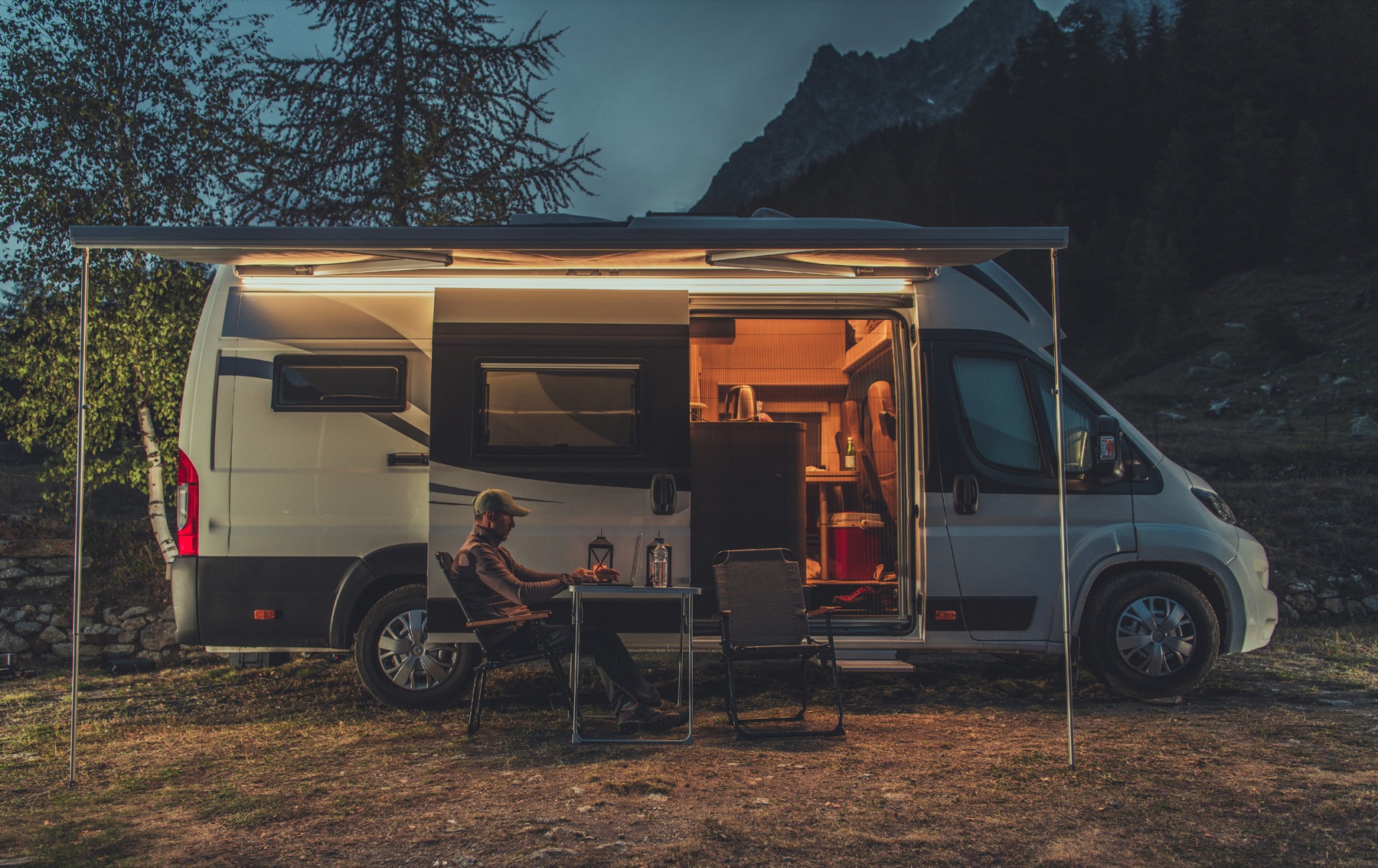
Starlink now sells three dishes for personal use: the compact Starlink Mini, the full-size Standard (now called Starlink V4), and the newer Starlink V5. They connect to the same satellites, but they’re built for different lives: one lives on a roof, one lives in a backpack, and one sits in between.
Every figure below comes from Starlink’s published specification sheets. Prices and plans change often and vary by country, so check starlink.com before you buy.
The short answer
- For a house that stays put, the Standard (V4) is the default: it comes with a full-size router with Ethernet ports and the largest Wi-Fi coverage.
- For a camper, boat, cabin or travel, the Mini is the one to get: it draws a fraction of the power, runs on 12–48 V DC, and has its Wi-Fi router built in.
- The V5 is worth a look if you want a home kit that’s much smaller and lighter than the Standard, with lower power use.
Side by side
| Starlink Mini | Standard (V4) | Starlink V5 | |
|---|---|---|---|
| Dish size | 298.5 × 259 × 38.5 mm (11.75 × 10.2 × 1.45 in) | 594 × 383 × 39.7 mm (23.4 × 15.1 × 1.5 in) | 384 × 306 × 34 mm (15.1 × 12 × 1.3 in) |
| Dish weight | 1.10 kg (2.43 lb) | 2.9 kg (6.4 lb) | 1.1 kg (2.4 lb) |
| Average power use | 25–40 W | 75–100 W | 35–50 W |
| Wi-Fi | Built in: Wi-Fi 5, dual-band | Separate router: Router 3, Router 4 or Router Mini, depending on kit | Separate Router Mini |
| Rated Wi-Fi coverage | Up to 1,200 ft² | Up to 3,200 ft² (Router 3) or 3,500 ft² (Router 4) | Not stated for Router Mini |
| Weather rating | IP67 | IP67 | IP67 |
| Snow melt | Up to 1 in/hour | Up to 1.5 in/hour | Up to 1.6 in/hour |
| Field of view | 110° | 110° | 110° |
Size and weight: the Mini is a different kind of product
The Standard is nearly two feet long and weighs 6.4 lb before you add the kickstand and cable. It’s designed to be mounted once and left alone.
The Mini is about the size of a small laptop and weighs 2.4 lb. It fits in a backpack, sets up on its kickstand in a couple of minutes, and comes with a pipe adapter and a flat mount in the box. That portability is the whole point of it.

Power: why the Mini is the travel kit
Power draw matters more than anything else once you leave the grid.
- The Standard averages 75–100 W and runs from an AC power supply. In a vehicle you need an inverter or Starlink’s DC-DC power supply accessory.
- The Mini averages 25–40 W and accepts 12–48 V DC directly. Starlink also lists a USB-C to barrel-jack cable that runs it from a USB-C Power Delivery source of at least 100 W (20 V, 5 A).
In practice, a portable power station with about 500 Wh of capacity could run a Mini for roughly ten hours or more, depending on conditions and how efficiently you power it. The same battery runs a Standard for a fraction of that.
Wi-Fi and Ethernet
The Mini’s router is built into the dish: Wi-Fi 5, rated for about 1,200 square feet and up to 128 devices. That’s plenty for a van, a cabin or an apartment. For a larger home, the Mini can join Starlink mesh systems, so you can add a Router Mini as a second access point. It also has one Ethernet port behind a weatherproof plug.
The Standard kit comes with a separate router (Router 3 or Router 4, depending on the kit), which covers a bigger area and has two Ethernet ports. Our Starlink router guide covers all of them, including how to use your own router.
Weather
All three dishes are rated IP67, which means they’re sealed against dust and water. The Standard melts snow slightly faster than the Mini (1.5 versus 1 inch per hour), which matters in heavy-snow areas where the dish lives outside all winter. The V5 is rated for winds up to 165 mph when properly mounted.
Plans: the dish doesn’t decide where you can use it
Your plan decides where Starlink works, not the hardware. Residential plans are tied to your service address, while Roam plans are built for using Starlink in different places. If you’ll move the dish between home and the road, check which plan covers both before you buy.
Which one should you buy?
- Buy the Standard (V4) for a permanent home installation where power isn’t a concern, especially a larger house where the stronger router helps.
- Buy the Mini for RVs, boats, camping, remote work trips, or a backup connection you can pack away.
- Consider the V5 for a permanent installation where you’d like a smaller, lighter dish and lower power use.
Wherever it goes, the dish needs a clear view of the sky. Our guide to mounting a Starlink dish covers choosing the spot and the right mount.
Quick answers
Can I use the Starlink Mini as my home internet? Yes. It’s a full Starlink terminal. For a small home it’s enough on its own; for a larger one, add a mesh node.
Is the Mini slower than the Standard? Starlink’s spec sheets don’t list guaranteed speeds for either, and real-world speed depends heavily on your plan, location and how busy your area is. Check Starlink’s current plan descriptions for your address.
Can the Mini run off a car’s 12 V socket? It accepts 12–48 V DC, but it can draw up to 60 W at peak, so use a socket and cable rated for that load, or a dedicated DC outlet.